


EP05 Conversation Hour 07 - Albert Bandura, PhD
- Average Rating:
- Not yet rated
- Topic Areas:
- Conversation Hours | Psychotherapy | Social Psychology | Clinical Demonstrations
- Categories:
- Evolution of Psychotherapy | Evolution of Psychotherapy 2005
- Faculty:
- Albert Bandura
- Duration:
- 56 Minutes
- Format:
- Audio Only
- Original Program Date:
- Dec 09, 2005
- License:
- Never Expires.
Description
Description: This conversation moves between theory, clinical application, and live demonstration to explore how self-efficacy, modeling, and social context shape change in therapy and health behavior. Topics range from group and internet-based interventions for chronic illness to medication, motivation, and resistance to change, all grounded in social learning principles. The session culminates in an in-room couple dialogue, giving participants a rare chance to see how these ideas play out moment by moment in real relational work.
Educational Objectives:
- To learn philosophies to various practitioners and theorists.
*Sessions may be edited for content and to preserve confidentiality*
Credits
Faculty
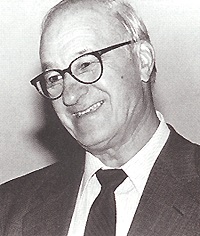
Albert Bandura Related Seminars and Products
ALBERT BANDURA, Ph.D., is Professor of Psychology, Stanford University. He has been elected to the American Academy of Arts and Sciences and the Institute of Medicine of the National Academy of Science. Dr. Bandura is a proponent of Self-Efficacy Theory. This theory and its diverse applications are presented in his recently published book, Self-Efficacy: The Exercise of Control.
Bandura has been responsible for contributions to the field of education and to several fields of psychology, including social cognitive theory, therapy, and personality psychology, and was also of incluence in the transition between behaviorism and cognitive psychology. He is known as the originator of social learning theory (renamed the social cognitive theory) and the theoretical construct of self-efficacy, and is also responsible for the influential 1961 Bobo doll experiment. This Bobo doll experiment demonstrated the concept of observational learning.